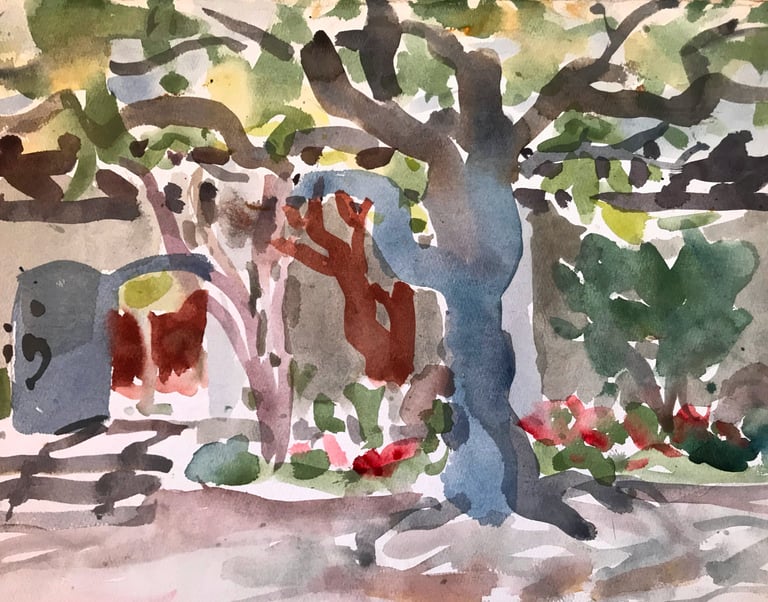
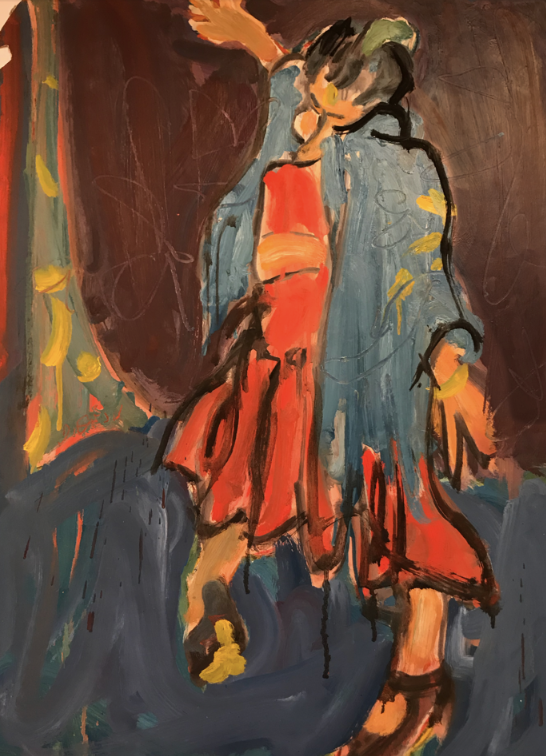
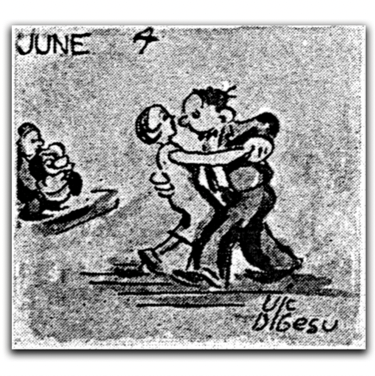
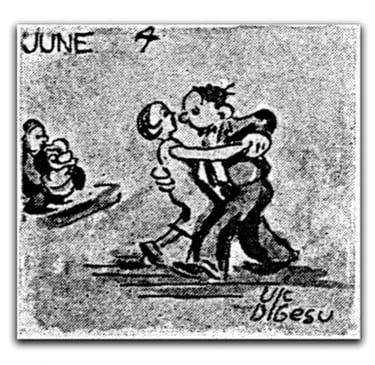
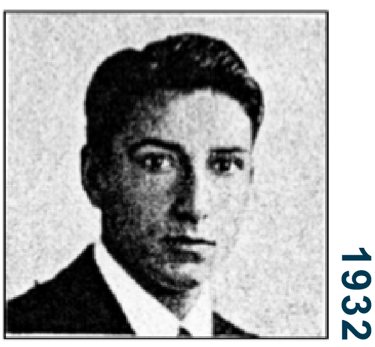
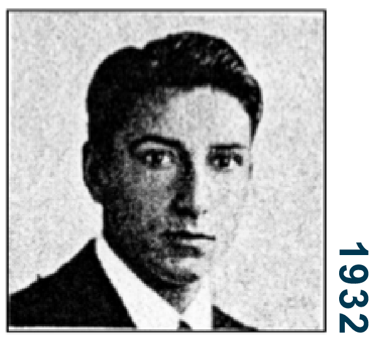
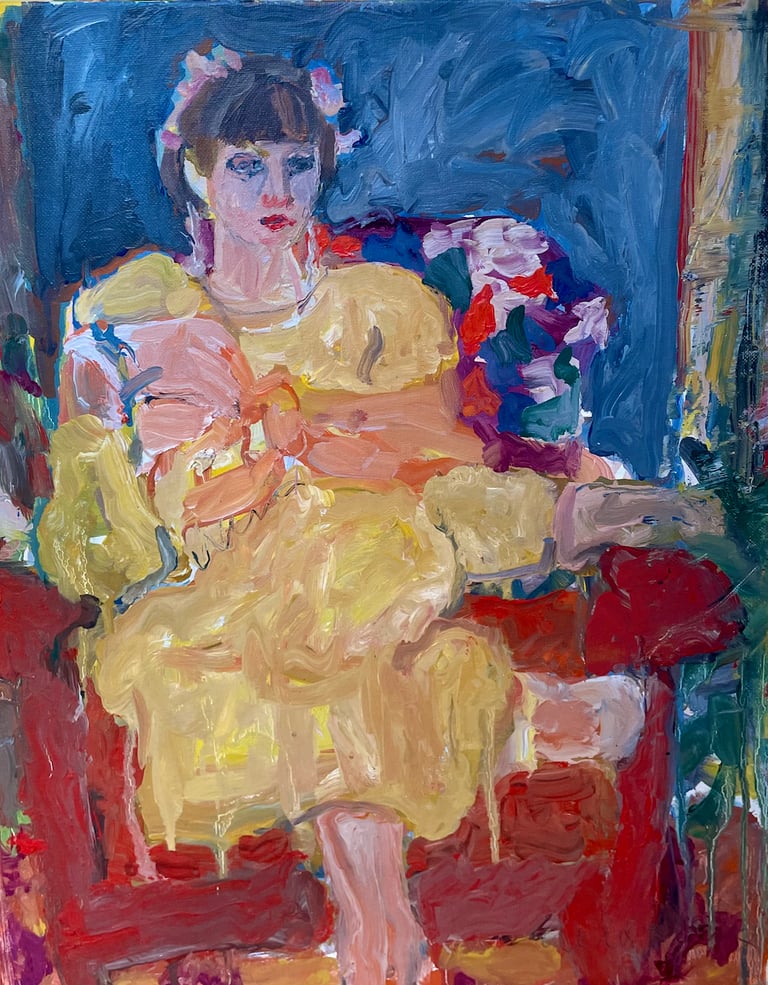
Victor Di Gesu (1914-1988) became an established commercial artist (in South Pasadena) at the age of 17, when he completed a series of cartoons featured in his high school year book. Between that time and when he enlisted in the army for World War II, Victor worked as a commercial artist, and in character animation at Disney.
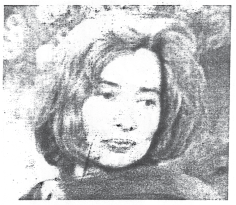
Janet de la Roche (1916-2000) grew up in Hollywood, and identified as an artist from an early age. Her grandmother had been an artist and was an inspirational role model for Janet from the time she was a little girl.
As Janet came of age, she felt stifled by the social confines of the early 1940's. Janet's parents hoped she would grow up and away from art, and expected her to marry and become a housewife. But the U.S. joined World War II, and despite all of its horrors, provided women with opportunities that had not previously been available. In an effort to liberate herself, Janet up and joined the military. This was one among other courageous decisions she would make in her life. As a 'Lady Marine' Janet served state side until the war ended in 1945.
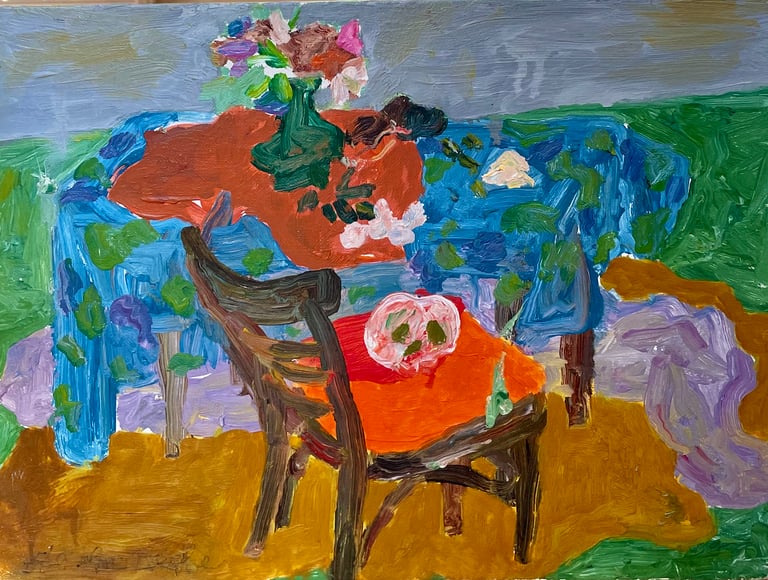
After the war ended, an influx of veterans re-entered civilian life. In Los Angeles, higher education exploded with veterans. And Janet and Victor eventually met in a painting class. Janet declared from the onset of their courtship that she would continue being an artist, come hell or high water. Victor dabbled in animation production after the war, but found he had changed as a person, and was no longer interested in that field. So Victor followed his soul mate's lead, and with Janet, they put 'Art First' for the rest of their lives.
The two moved to Monterey and purchased a property in the artist's colony known as Huckleberry Hill. There was no house–yet–and it was remote, but it was near Carmel. While perfect for them, Janet & Victor were very keen to travel to Europe. Victor having been exposed to French culture during his deployment in France, yearned to return and study art. Janet looked forward to being accepted as an artist since Europe, and France in particular appreciated artists and the positive contributions they made to society. With the help of GI funds, Janet & Victor headed to Europe and studied painting at an atelier in Paris, and then continued to study, exhibit, and paint their way around France, Spain and Italy.
After their extended time abroad, the couple returned to Monterey and settled back in to their artist colony–or what is known today as Pacific Grove. Victor built the couple a 'Modern' house (that still stands), and both artists were invited to become members of the Carmel Art Association (CAA). Janet & Victor remained active in the CAA until their respective passings.
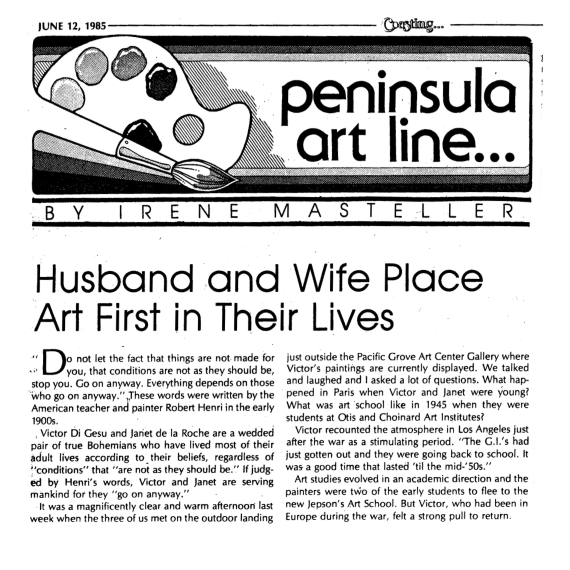
Over the years, local journalists wrote lively accounts about the artist couple, who seemed for the most part to be inseparable. Neighboring children (now middle-aged and beyond) have shared fond memories of hearing "Flamenco music playing at all hours from Janet & Victor's." And Victor is remembered to this day, as a charismatic painting teacher at the Pacific Grove Community Center. But back in those post war years while American society was being transformed into an economic powerhouse, this artist couple weighed their life choices, and time after time chose the uncertain path of art. They never looked back.